




On this page
The Search Console API update announced on November 16, 2026 adds ways to analyze branded queries, web multimodal search and combined country or device groups. Checked November 28, our recommendation for a small publisher is to improve the question your report answers before commissioning a new dashboard. More reporting options do not themselves create traffic or income.
What changed in the Search Console API update?
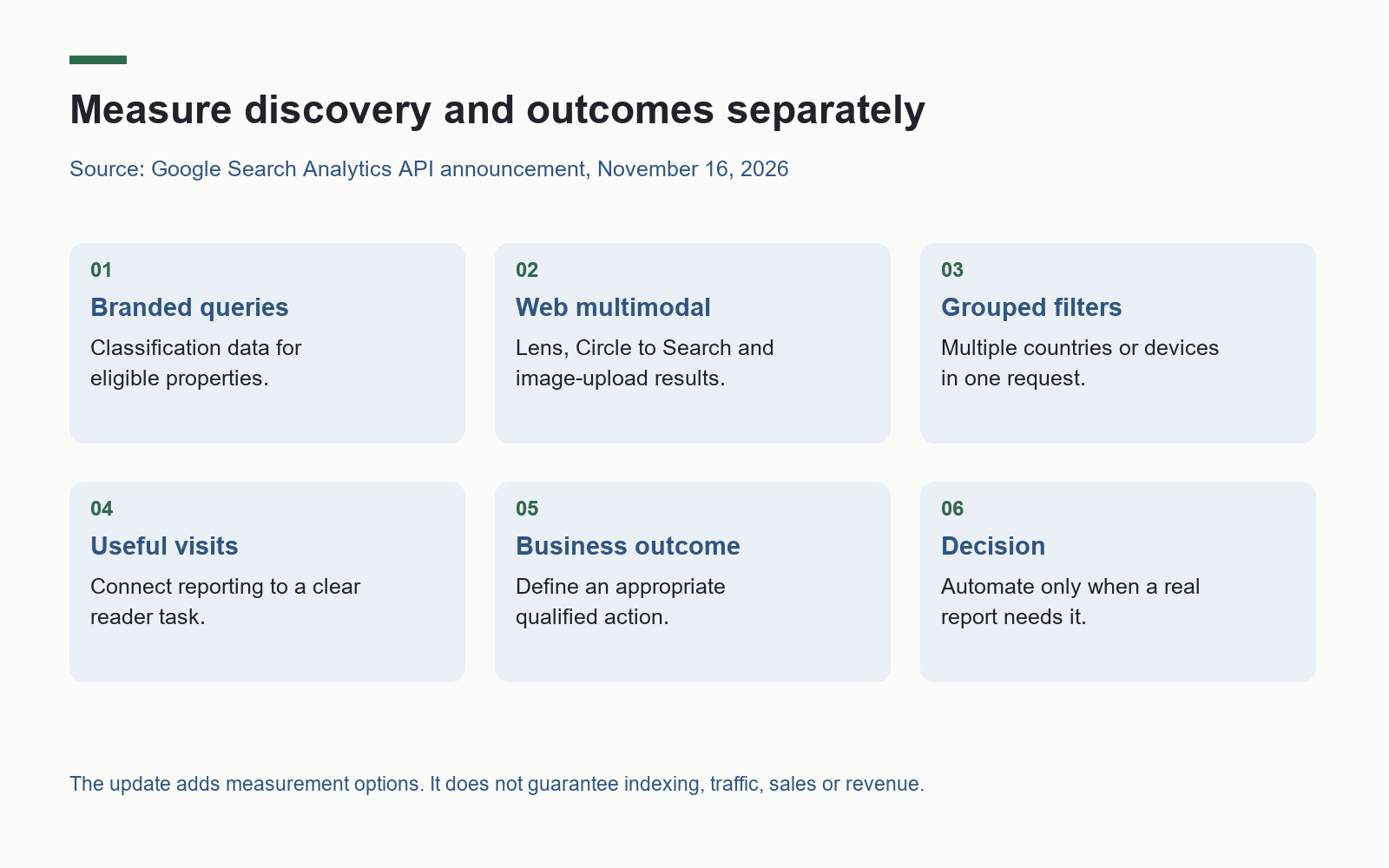
Google’s official announcement brings three existing performance-report capabilities into the Search Analytics API: branded-query classification, web multimodal reporting and multi-country or multi-device filters.
The announcement says branded data is available only for eligible properties. Web multimodal covers sources such as Google Lens, Circle to Search and image uploads in Search; it should not be casually relabelled as a complete report of every AI-generated answer.
These are measurement capabilities. They do not change your rights to collect personal data, guarantee indexing or establish that a visit produced a sale.
Why it matters
A publisher can make a poor decision when a blended traffic total hides different audience jobs. People searching a publication’s name are different from people finding an answer to a new question. Visual discovery can also behave differently from a conventional text query.
Separating those paths may help identify which original explanations deserve updates, which images are useful and which topics bring suitable readers. That is an editorial interpretation to investigate, not proof of a universal conversion pattern.
For a blog and newsletter business, the useful outcome might be a qualified signup or a reader completing a relevant guide. A larger search total without those outcomes may not justify extra production spending.
Does every publisher need an API project?
No. A small publication can often begin with the ordinary Search Console interface and a concise recurring review. An API integration is useful when it removes real repeated work or makes a necessary comparison possible.
Before hiring someone, write the decision you need to make, the property and reporting period, the required dimensions and the action a result could trigger. If no one can explain how the report changes a decision, more automation may just create another dashboard to maintain.
Keep reporting access limited to people who need it. Use the official authentication and permissions model for any implementation, rather than sharing credentials in a spreadsheet.
What should an affiliate publisher measure?
Measure the path from the relevant search question to a useful explanation and then an appropriately tracked action. Do not multiply every search click by a guessed purchase value.
Our affiliate marketing guide separates product visits, qualifying purchases and approved commissions. Keep the same discipline when bringing search data into a business report.
Likewise, a newsletter referral campaign should distinguish signups from retained active readers. An API cannot resolve inconsistent definitions by itself.
What should you do now?
Review your existing report and identify one missing comparison. If the ordinary interface answers it, use that first. If an integration is justified, ask the implementer to follow the current Search Analytics API documentation, including supported values and property eligibility.
Keep an annotation for the measurement change so you do not mistake newly available reporting for a sudden audience increase. Compare like periods and investigate missing data before drawing a business conclusion.
Our recommendation: use the update to ask a better question about real readers. Pay for additional reporting only when it can support a specific editorial or commercial decision.
Sources
- official announcement, checked November 28, 2026.
- Search Analytics API documentation, checked November 28, 2026.
Information only, not financial, tax or legal advice. Fees and prices change, so check the platform before you act. Disclaimer (opens in a new tab)
Was this article helpful?



Comments