




On this page
Pinterest Microsoft Advertising integration was announced on November 23, 2026, opening another route for eligible advertisers to reach Pinterest inventory. Checked November 28, our recommendation is to evaluate it as an additional distribution channel, with separate measurement and a firm cost limit. It is not a new creator payout program or a reason to assume more traffic will be profitable.
What happened with Pinterest Microsoft Advertising?
Pinterest’s official announcement describes access for eligible Microsoft Advertising campaigns to open-auction inventory across Pinterest’s home feed, search and related Pins. It uses a contextual bidding model within existing buying workflows.
The initial availability named in the announcement is North America, Australia and New Zealand. Eligibility and the actual campaign controls matter; the announcement should not be read as universal access for every advertiser or market.
Why it matters
An advertiser already using Microsoft’s tools may have another environment to test without building an entirely separate buying workflow. That could reduce administration, but it does not establish that the additional audience will respond like the existing one.
Pinterest is a visual discovery environment. A useful product image and a clear destination may matter differently from a text-search campaign. Treat creative fit and buyer intent as hypotheses to test, not as guaranteed consequences of the integration.
For small publishers, the first decision is whether paid acquisition belongs in the business at all. Unproven revenue per reader can make even inexpensive traffic costly.
Is this an affiliate or creator earnings feature?
No. The announcement concerns advertiser access to inventory. A creator’s separate affiliate commission or commercial agreement follows its own rules.
Our Pinterest affiliate guide explains the permitted recommendation path, while affiliate marketing basics separates clicks from qualifying purchases. Paying for a visit does not make the resulting action commission-eligible.
Read the merchant’s rules before using paid traffic around an affiliate offer. Some promotion routes may be restricted, and an advertiser integration does not override those conditions.
How should a small advertiser evaluate the economics?
Start with the retained value of a genuinely acquired customer or reader, based on evidence. Do not assign an attractive lifetime value to an untested signup.
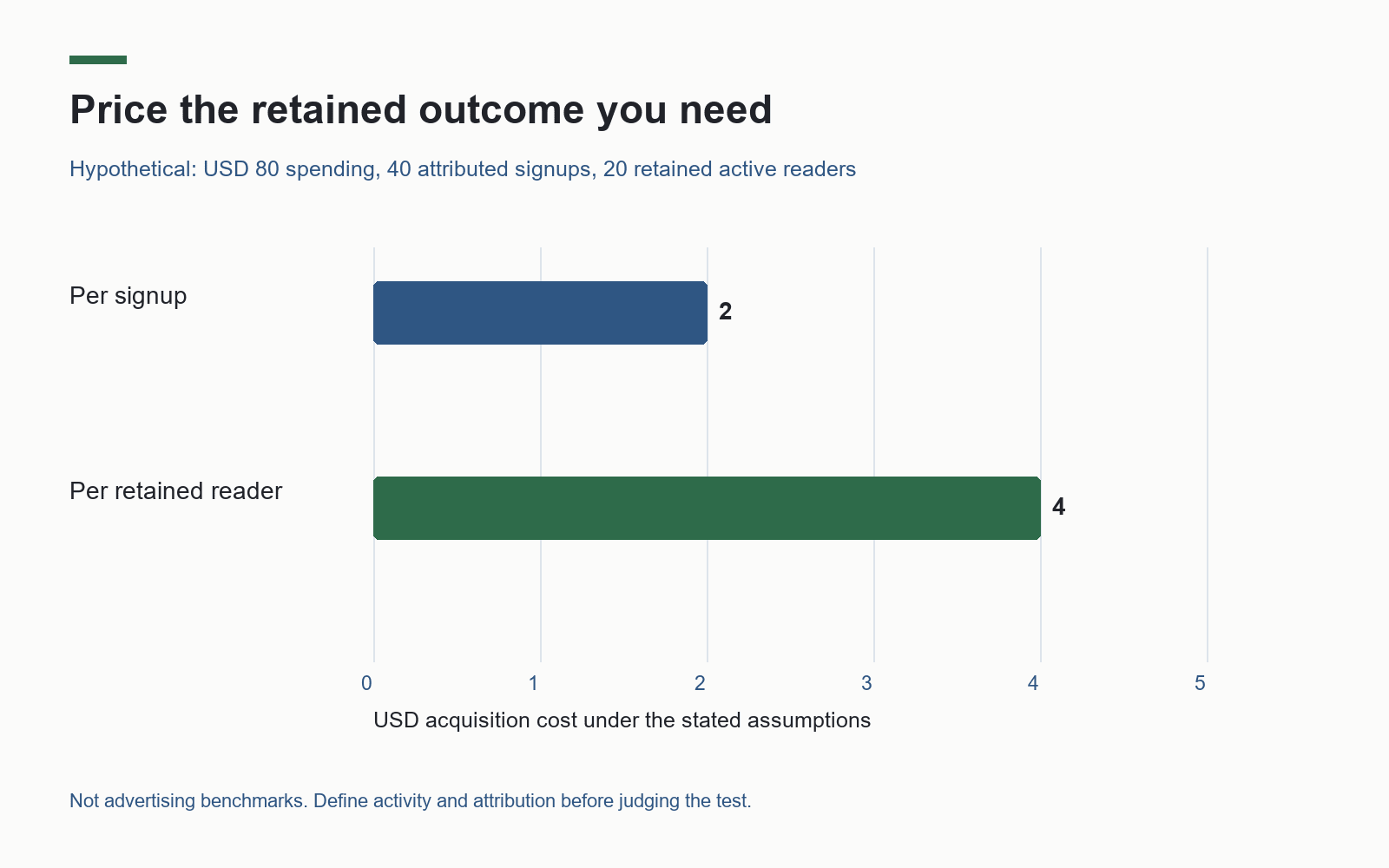
Hypothetical acquisition test: assume USD 80 campaign spending produces 40 attributed signups, of which 20 remain meaningfully active at the review point. Cost is USD 2 per signup or USD 4 per retained active reader. These invented figures are not campaign benchmarks. The test is viable only if the actual business can support the appropriate cost.
Keep the additional inventory identifiable in reporting where the product supports it. If performance is blended with an existing campaign, document the change before interpreting an apparent improvement or decline.
What should you do now?
Check the offered eligibility and controls in the actual advertising account. Confirm the destination, product claims and promotion permissions. Define a small test budget, an appropriate review window and a stop condition before spending.
For a newsletter acquisition campaign, use referral-reward economics as an alternative comparison rather than assuming paid ads are the only growth route. For an advertiser-funded publication, sponsorship pricing requires a different contract and measurement process.
Our recommendation: test only when the offer and measurement are ready. Judge retained outcomes after cost, and keep the integration outside the baseline forecast until it produces evidence.
Sources
- official announcement, checked November 28, 2026.
Information only, not financial, tax or legal advice. Fees and prices change, so check the platform before you act. Disclaimer (opens in a new tab)
Was this article helpful?



Comments