




On this page
Sell original designs by validating one buyer problem before building a catalog. In this first part, you will choose a buyer, compare useful evidence and write a small product brief that can guide a real launch. We checked the marketplace and rights sources on November 25, 2026. The goal is a defensible next experiment, not a prediction of income.
What do you need before you sell original designs?
You need a design skill, a specific buyer hypothesis and a place to record evidence. Use tools you already have for this stage; defer shop subscriptions, advertising and a large sample order until the offer is clearer.
- Time: Plan a focused research session and a separate session to review what you learned. The amount of work depends on your familiarity with the buyer.
- Cost: Research can begin without a paid store. Later software, licences and physical samples belong in the launch budget.
- Tools: A notebook or document, your own design files and a way to preserve source-asset permissions.
- Output: One brief stating the buyer, job, proposed product, evidence, risks and test.
| Stage | Question | Finished output |
|---|---|---|
| Buyer | Who has the problem? | A specific group and situation |
| Job | What result are they buying? | A plain-language outcome |
| Evidence | What supports the idea? | Observations with dates and context |
| Offer | What will you deliver? | One bounded product concept |
| Decision | What would justify more work? | A test and a stop rule |
This is part one of Sell Original Designs: From Idea to First Offer. Continue to pricing and packaging in part two, then launching and delivery in part three.
How do you validate an original-design idea?
Validate the buyer’s job and constraints, not whether people are willing to compliment your artwork. The following steps produce a small, usable brief rather than an enormous inspiration board.
-
Choose a buyer in a specific situation
Name a group whose needs you understand and the moment when the design becomes useful. “People who like art” is too broad. A local independent café preparing a seasonal menu, or a gardener choosing a personalised gift, gives you something concrete to investigate.
Write down what they are trying to finish, who decides and what would make the purchase inconvenient. Separate a personal taste preference from a practical requirement such as print size, delivery location or editable text.
-
Explore distinct concepts without copying a listing
Create a few rough directions from your own ideas and references you may lawfully use. Change the underlying concept, not merely the colour of a competitor’s artwork. Keep the drafts so you can trace how the design developed.
Choose the format after the job is clear. A ready-to-print file, an editable layout and a finished physical gift solve different problems even if they share a visual theme. Label each concept with the result it promises in your private brief.
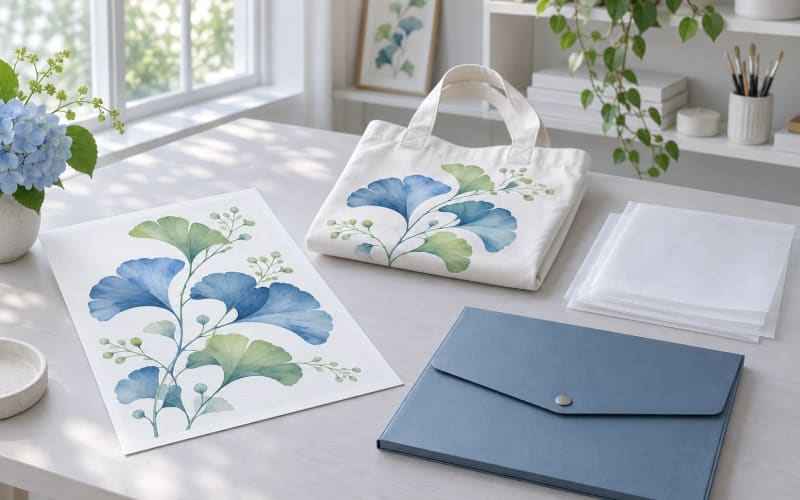
Illustrative studio scene: keep distinct concept drafts and a record of how your idea develops. -
Collect evidence that could disprove the idea
Record relevant questions, purchasing constraints and alternatives. In conversations with willing participants, ask how they currently solve the problem and what went wrong last time. Avoid leading with “Would you buy this?” because a polite yes is a weak purchase signal.
When examining public product information, note patterns in the problem rather than copying text, images or customer data. Save the source and date of an observation. Separate what someone actually said from your explanation of what it might mean.
-
Turn the evidence into a small offer brief
Write the promised result, the included contents and the main limitation. Include who should not buy it. If the buyer needs custom writing or extensive changes, decide whether this is really a service rather than a ready-made product.
Connect each important design choice to a buyer need. If you cannot explain why a feature belongs in the offer, leave it out of the first version. The brief should make it easier to stop adding options.
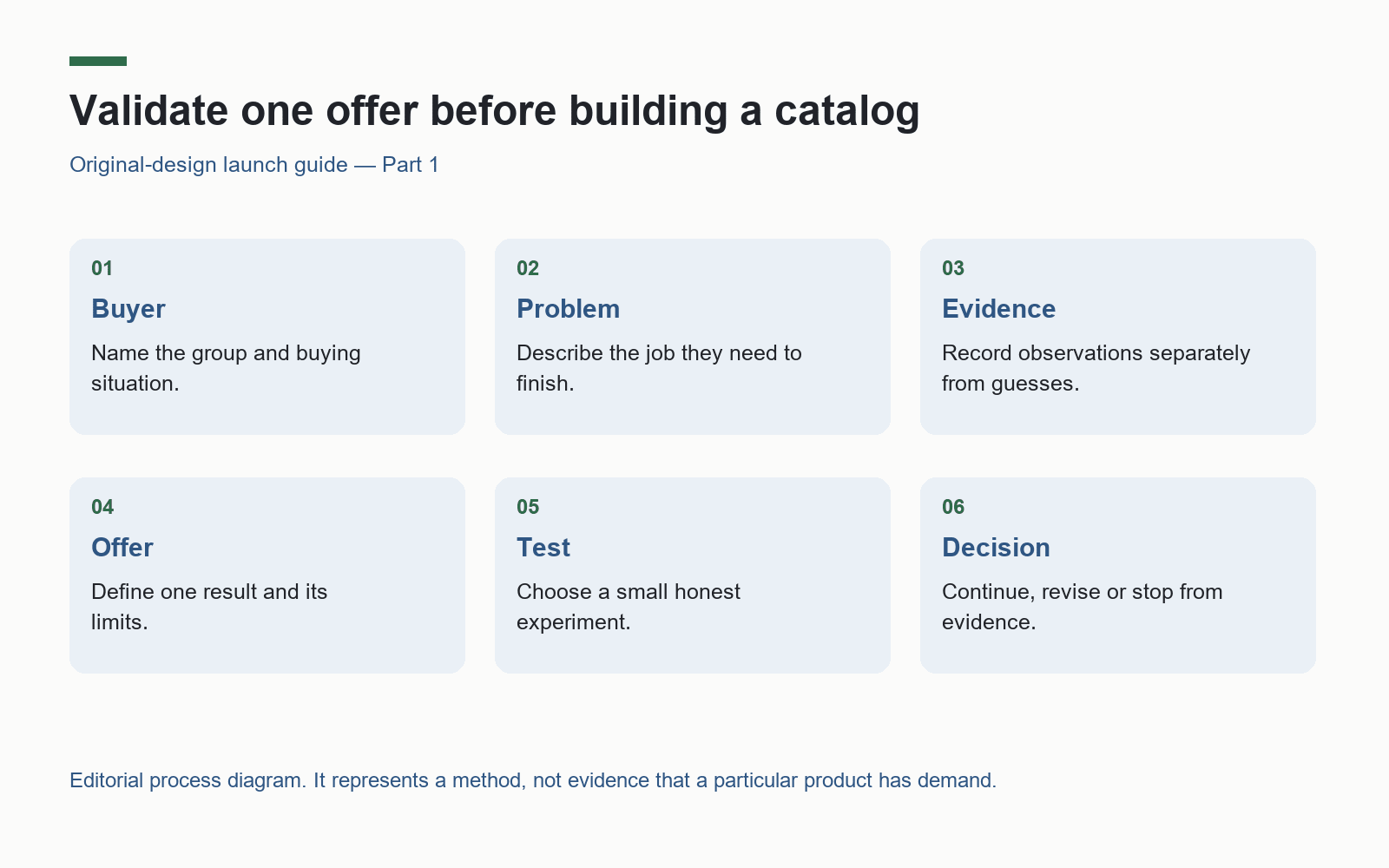
Keep the chain visible: buyer problem, observed evidence, offer and test. -
Choose a test and a stop rule
Define the smallest honest experiment that can teach you something. It might be showing an accurate sample to suitable potential buyers or launching one complete listing after its files and costs are ready. Do not accept money for a result you cannot supply.
Decide what evidence would lead you to continue, revise or stop. Use your available time and affordable budget to set boundaries. A test without a stopping point can turn a weak idea into months of extra variants.
What does a usable design brief look like?
A usable brief names a customer result and the operational limits. Consider this fictional planning example; it is not evidence of market demand.
Example brief: Create an original botanical art download for buyers who want a coordinated print pair for a small room. Deliver print-ready files in clearly named sizes and a short printing note. Exclude custom portraits, physical shipping and unlimited colour changes. Test whether suitable buyers understand the contents and can identify a place they would use the pair before expanding the collection.
The example makes several decisions visible. It is a file offer rather than shipped merchandise. It has a bounded visual theme. It excludes labour that would turn a download into a custom commission. Those boundaries help you price and package the product in the next part.
If the buyer’s value is in a physical object, use the same brief structure but add the base item, fulfilment route and sample check. Read digital downloads versus POD before committing to both formats.
What rights checks belong at this stage?
Check whether the concept relies on somebody else’s protected work or identity before polishing it. Do not build a product around a familiar character, brand slogan or copied composition simply because similar listings exist.
Etsy’s Creativity Standards describe seller involvement in products on its marketplace. Its production-partner guidance matters when another business manufactures your original design. These are marketplace requirements, not a complete clearance of the artwork.
For names or slogans in the US, the USPTO explains why searching similar marks matters. A search is part of a risk assessment, not a guarantee that a design is safe everywhere. Use the AI-assisted POD rights checklist and seek appropriate advice when the issue is significant.
How do you know this part is complete?
You should be able to explain the buyer, result, contents and main risk without opening a design app. Another person should be able to read the brief and tell you what the customer receives and what remains outside the offer.
If your evidence is weak, narrow the test rather than asserting demand. If every buyer needs different work, explore a productized service. When the brief is clear, move to part two: price and package.
Tip: Keep an evidence column and an interpretation column. “A buyer asked for an editable date field” is evidence; “everyone wants editable templates” is an interpretation that needs more support.
Frequently asked questions
Do I need a large audience to validate a design?
No. You need access to relevant evidence and a manageable test. A large but unrelated audience may teach you less than a small group with the actual problem.
Can I copy a design that already sells?
No. Research the buyer’s need and create your own response. Existing listings do not establish that copying their artwork or branding is permitted.
Should I open a store before researching?
We recommend writing the brief first. A store adds work and expense before you know what you are offering.
What if the test does not show demand?
Revise the buyer, problem or offer, or stop the experiment. Avoid treating more variants as the automatic solution.
Sources
- Etsy: Creativity Standards, checked 25 November 2026.
- Etsy: Working with Production Partners, checked 25 November 2026.
- USPTO: Why Search for Similar Trademarks?, checked 25 November 2026.
Information only, not financial, tax or legal advice. Fees and prices change, so check the platform before you act. Disclaimer (opens in a new tab)
Was this article helpful?

Comments