




On this page
Launch original designs with one complete offer, a tested delivery route and a support process you can maintain. This third part takes the brief and package from the earlier stages into a measured first launch. We checked the delivery sources on November 25, 2026. The first objective is to learn whether customers understand and can use the product, not to produce a large catalog quickly.
What do you need to launch original designs?
You need the validated brief from part one and the tested package from part two. If the product still needs significant explanation from you, repair that before inviting more buyers.
- Time: Leave room for a listing review, delivery test and a monitored launch period you can support.
- Cost: Use the actual account, listing, processing and fulfilment costs for your channel. Set an affordable experiment limit before promotion.
- Tools: The tested product package, accurate preview files, a support address and a simple order log.
- Output: One honest live offer, a verified delivery route and a record of what customers ask.
| Checkpoint | What must work | Evidence to retain |
|---|---|---|
| Listing | Contents and limits are clear | The published version |
| Purchase | The correct product can be selected | A permitted test record |
| Delivery | Files or fulfilment route are correct | The delivered version |
| Support | Questions reach the right place | Issue and resolution log |
| Decision | Costs and time are visible | Contribution and workload notes |
How do you launch without creating avoidable support work?
Launch one bounded product and follow the buyer’s journey end to end. A small launch makes it easier to identify the cause of problems than a collection of untested listings.
-
Write a listing that describes the exact package
Start with the result and what arrives. State whether the purchase is a download, a physical product or custom work. Describe the required software, sizes, included files and meaningful exclusions before decorative storytelling.
Use previews made from the delivered design, not an unrelated idealised result. Avoid implying that props, frames, custom revisions or printing are included unless they are. Have a fresh reader explain the offer back to you.
-
Check the product and delivery connection
Confirm that the selected listing points to the tested file version or intended supplier product. Check each purchasable variant. A correct cover image cannot compensate for a size option connected to the wrong fulfilment item.
For physical goods, make the production and shipping assumptions consistent with the route you can support. For downloads, confirm that the archive contains the promised files and a readable start-here note. Keep the master separate from the customer package.

Illustrative studio scene: the delivery promise must match the files or physical product actually supplied. -
Test the allowed buyer journey
Use the platform’s permitted test or preview route and check the confirmation, download or fulfilment flow. Do not fabricate a customer, post a fake review or manipulate marketplace signals to make the launch appear successful.
Open the delivery on an appropriate second device or application when feasible. Confirm where a real buyer would find help. If a test fails, fix the relevant connection and repeat that check before sending more visitors.
-
Prepare support replies and a version log
Write concise replies for locating a purchase, choosing the right file and reporting a genuine problem. Ask only for the information needed to resolve the issue. Keep customer data private and avoid sharing screenshots containing personal details.
Record the product version and the problem separately from the customer’s identity. If several buyers ask the same question, change the listing or package. A support template is helpful, but the best repeated answer may be a clearer product.
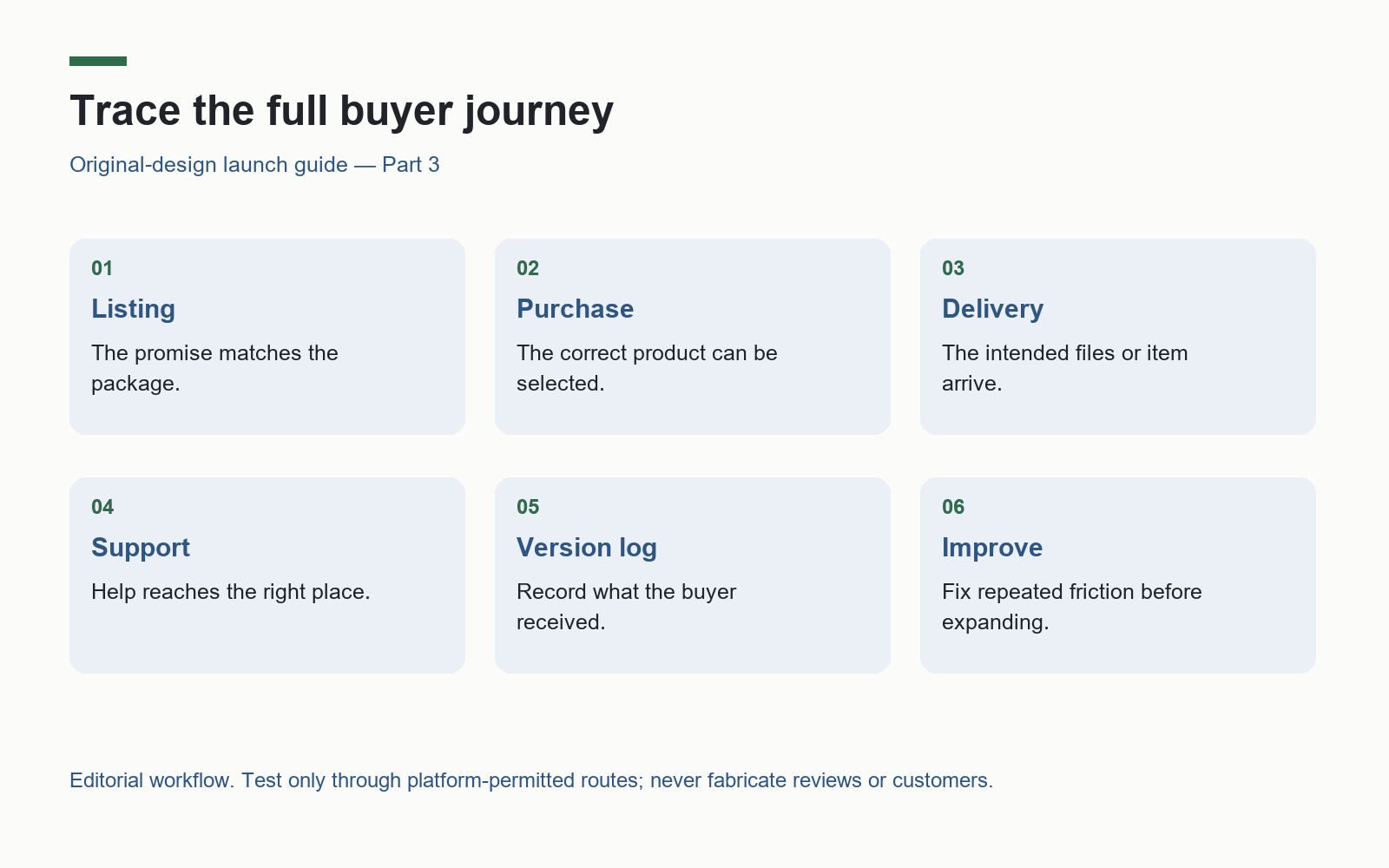
Follow the complete route; a successful checkout is only one checkpoint. -
Review the launch before expanding
Compare relevant visits, qualified questions, completed purchases, contribution and support time. Use the actual channel costs and distinguish discounts or test orders from normal sales. Avoid drawing a broad demand conclusion from a single enthusiastic response.
Choose one next action: improve the offer, improve the delivery, test another acquisition route, add a justified variant or stop. Add products only when the existing workflow is understandable and reliable.
What should a delivery test reveal?
A delivery test should show whether the customer can access the promised result without your private knowledge. For a download, that includes locating the files, opening them and understanding the first useful action.
Etsy’s download guidance explains how buyers access digital purchases, including guest purchases. Link customers to the appropriate official instructions when their problem is platform access rather than your product file.
For a made-to-order item, define the information you need and when work can start. A vague “send details after purchase” instruction creates delays when buyers do not know which details matter. Ask for the necessary specification in a simple structured form or message appropriate to the platform.
If your offer is really a custom service, use the productized-services guide. Its scope boundaries are useful when a buyer request changes the work after the order begins.
Which launch numbers matter most?
Track enough information to distinguish a weak offer from a broken process. Low sales with almost no relevant visitors is different from many suitable buyers abandoning an unclear listing. A completed order followed by substantial remedial work is different from a clean delivery.
Example record, not reported results: A seller logs each order’s revenue, actual selling deductions, delivery cost, support minutes and product version. One buyer could not identify the right print size, so the seller improves file names and the start-here document. The next review checks whether that question recurs. The useful lesson is the resolved friction, not an invented conversion benchmark.
Do not count revenue as personal pay. Recover creation work, software, marketing and administration before deciding what the product contributes to the business. Keep enough cash for obligations that arise before a payout becomes available.
How do you handle refunds and changes?
Use the platform’s current rules and the consumer requirements relevant to the transaction. Do not write a blanket policy that claims to remove rights a buyer has under applicable law. Explain the product clearly, respond to genuine problems and keep a record of the resolution.
For platform-specific steps, use official help. Etsy’s digital-listing guidance and Fiverr’s order process describe different transaction workflows; a download store and a freelance package should not borrow each other’s assumptions blindly.
When should you expand the collection?
Expand when the first offer has a clear buyer, stable delivery and a manageable support burden. Add the variant customers actually need, not every variant your software can export.
Keep a short improvement queue ranked by the problem it solves. An updated size guide may be more valuable than another colour. A clearer intake question may be more valuable than a new product. Revisit Etsy versus Payhip only when the acquisition and fee evidence gives you a reason to reconsider the channel.
Tip: Save the published listing and delivered package together after each meaningful update. Support is easier when you can identify exactly what a buyer was promised.
Frequently asked questions
How many products should I launch with?
Start with one complete offer you can deliver reliably. Add variants when customer evidence and the workflow justify them.
Can I use generated product photos as proof?
No. Illustrative imagery does not establish that a sample was made or delivered. Use the required accurate previews and real evidence for the product type.
What if customers keep asking the same question?
Improve the listing, file names or instructions. Repeated support questions are product information, not just messages to answer faster.
Should I run ads immediately?
Test the offer and delivery first. Paid traffic makes an unclear promise or broken workflow more expensive.
Sources
- Etsy: How to Download a Digital Item, checked 25 November 2026.
- Etsy: How to Manage Your Digital Listings, checked 25 November 2026.
- Fiverr: Freelancer Order Process, checked 25 November 2026.
Information only, not financial, tax or legal advice. Fees and prices change, so check the platform before you act. Disclaimer (opens in a new tab)
Was this article helpful?



Comments