




On this page
Pinterest Creators to Watch for 2027 is a new editorial spotlight, not a creator-payout program or a finished forecast of next year’s trends. Announced November 17, 2026 and checked November 28, it offers useful examples of original expertise. Our recommendation is to study how creators explain a useful process, then develop your own work rather than copying their aesthetics or assuming the selection guarantees sales.
What happened?
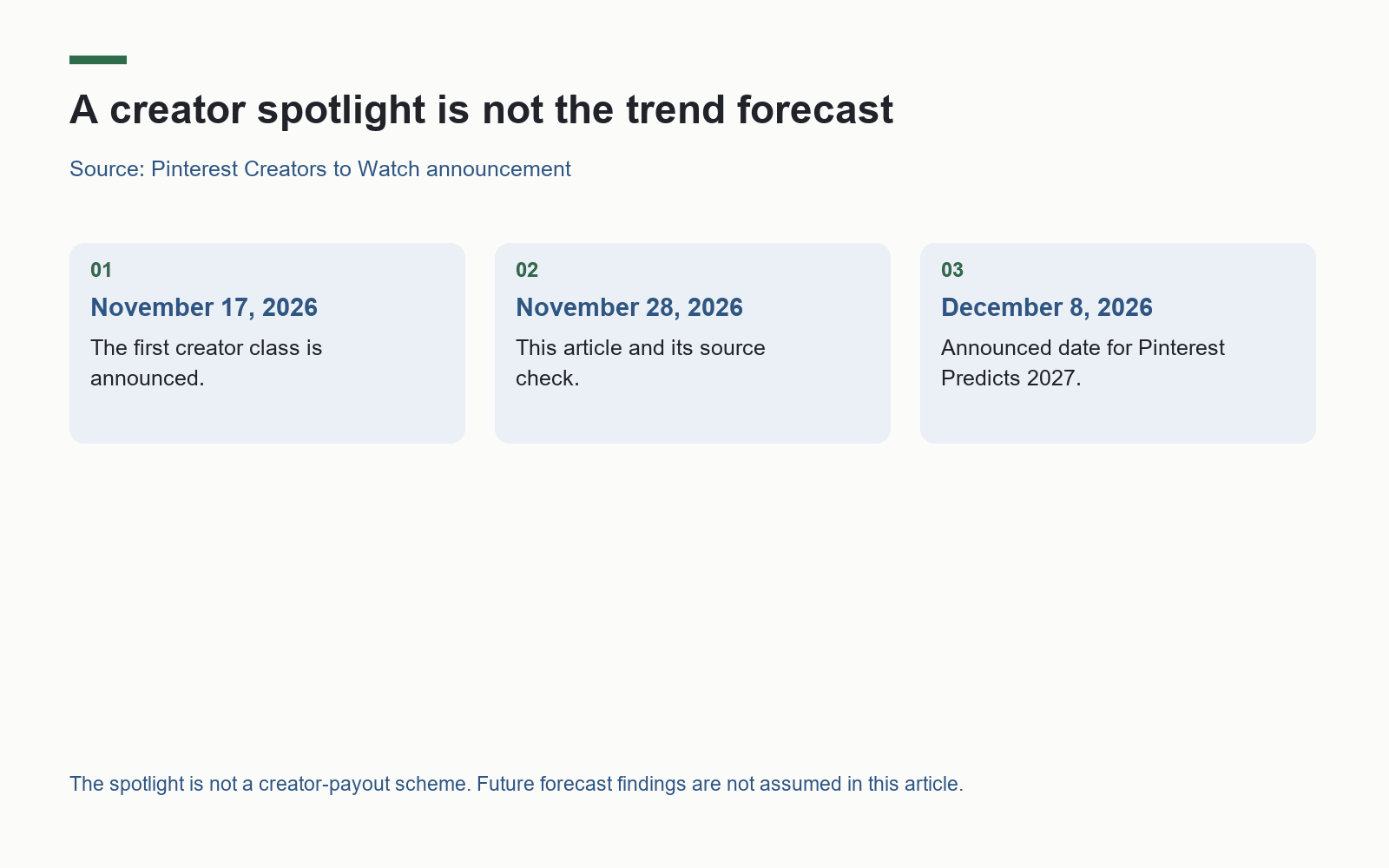
Pinterest’s official announcement introduces its first annual class of 20 global creators across subjects such as fashion, beauty, home and food. It describes creators helping people move from visual inspiration toward practical decisions.
The announcement also says Pinterest Predicts for 2027 will be announced on December 8, 2026. As of this article’s check date, the creator list is not that forthcoming report. Do not attach a made-up set of “official 2027 trends” to it.
What can publishers learn from Pinterest Creators to Watch?
The useful lesson is to make expertise visible through original work. A finished result can attract attention, while a clear process gives the reader a reason to trust and act on it.
For a practical publisher, that might mean showing why a material suits a project, what an intermediate step should look like or which mistake changes the outcome. These are our editorial applications of the announcement’s theme, not claims that Pinterest has prescribed a particular publishing formula.
Keep the subject close to what you can demonstrate. A broad imitation of fashionable content is weaker than a narrow explanation supported by real knowledge.
Why it matters
An earning strategy built around visual discovery needs something worth discovering. A recognisable style may help, but the underlying usefulness and credibility still matter when the reader reaches your page or product.
The spotlight can provide a prompt to audit your own publication: does it offer original expertise, or does it mainly repackage popular imagery? Readers need a reason to trust the recommendation beyond its appearance.
Our Pinterest affiliate guide explains why an original useful Pin and an honest destination are stronger foundations than posting large volumes of commercial links.
How should you use this without copying creators?
Study the structure of a useful explanation, then choose a different original problem and evidence. You can learn that a process close-up clarifies a task without reproducing another person’s composition, artwork or distinctive project.
Keep your source files, process notes and permissions. When a physical object is involved, a real sample or demonstration is stronger evidence than a generated editorial cover. Do not claim a production process you did not use.
For a publication, turn your expertise into a clear newsletter niche and a repeatable reader promise. A platform spotlight is not a substitute for deciding who the work serves.
What should you do now?
Choose one existing explanation you can improve with original evidence. Add the missing process detail, the limitation a beginner needs and a clear suitable next step. Then adapt it thoughtfully through the blog-to-newsletter workflow if the audience has asked for an email edition.
If you cover the forthcoming Pinterest forecast, distinguish its publication date and actual findings from your own design hypotheses. Do not treat an unannounced prediction as settled guidance.
Our recommendation: use the creator list as a reminder to show useful original expertise. Evaluate your business on actual audience response and retained results, not proximity to a trend label.
Sources
- official announcement, checked November 28, 2026.
Information only, not financial, tax or legal advice. Fees and prices change, so check the platform before you act. Disclaimer (opens in a new tab)
Was this article helpful?
Comments