




On this page
beehiiv podcast ads launched on October 27, 2026, adding direct-sold campaigns and programmatic advertising to its podcast tools. Checked November 28, our recommendation is to evaluate the feature for an existing useful show before launching audio purely to chase advertising. Access to inventory is different from advertiser demand, a filled placement or a finalized payout.
What changed with beehiiv podcast ads?
beehiiv’s official announcement introduces dynamic ad insertion, a campaigns manager, programmatic ads and separate ad reporting. It says podcast ads and the campaigns manager are available on paid plans, without a minimum download count to get started.
Dynamic insertion separates the ad from the permanent episode audio, so a campaign can be changed without rebuilding the entire recording. The announcement describes direct sponsor ads taking priority, with programmatic ads when available and house promotions afterward.
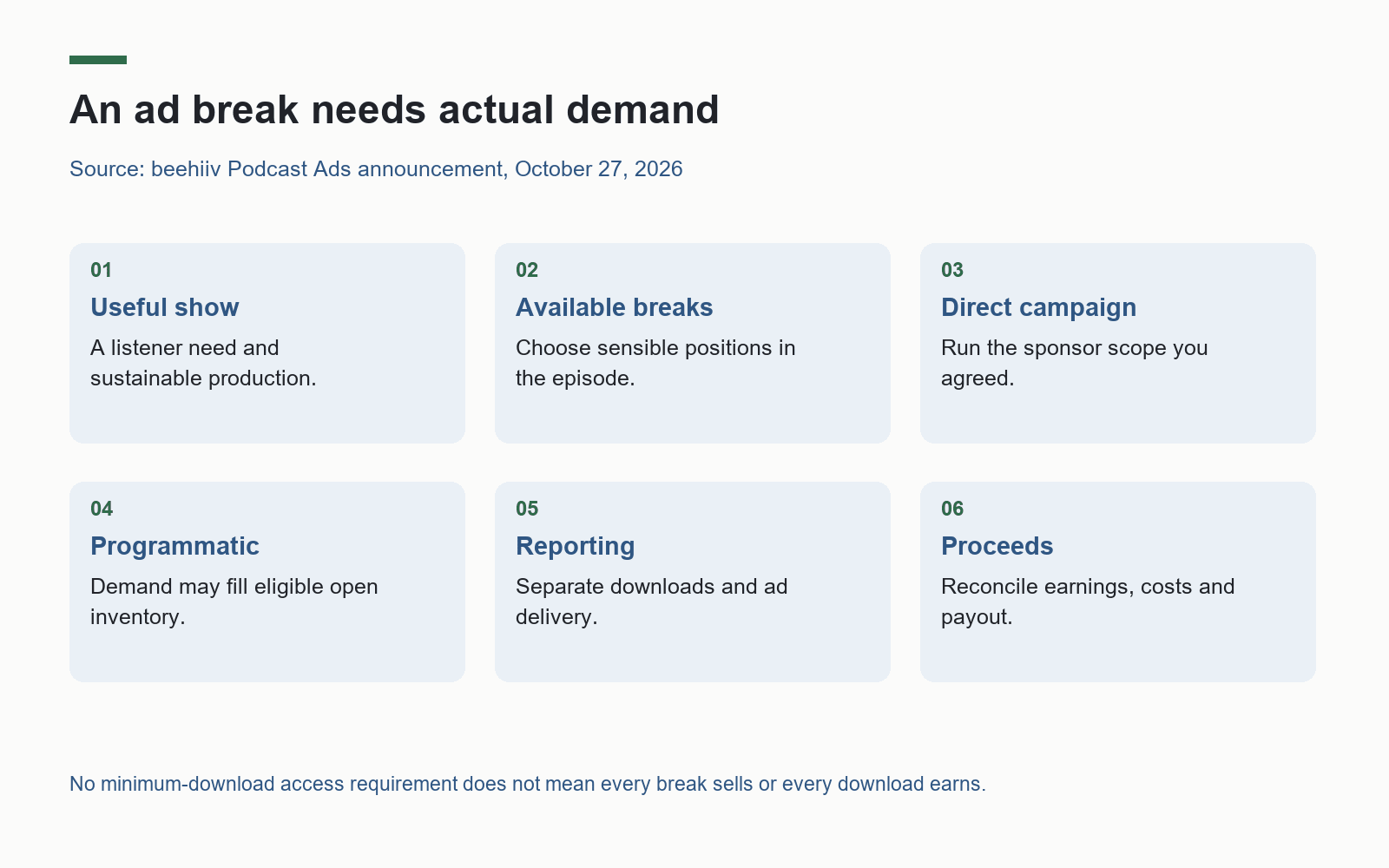
That order is not a promise that every available break will sell. beehiiv explicitly says programmatic fill depends on the show and what advertisers are buying.
Why it matters
A newsletter publisher with a relevant existing show may be able to organize commercial audio alongside the publication. Older episodes can also have useful ongoing listening, making a replaceable ad more practical than a permanently embedded expired offer.
The business question is still whether the additional work earns its keep. Recording, editing, transcripts, guest permissions, ad approval and reporting can make a new format expensive even when hosting is included in a platform plan.
Do not launch an audio series solely because a monetization switch exists. A recurring listener need and a production plan come first.
How is a direct sponsor different from programmatic advertising?
A direct sponsor buys the scope you negotiate. Programmatic advertising supplies demand through a marketplace under the product’s rules. They require different forecasting assumptions and may create different reporting obligations.
For a direct agreement, define the placement, period, creative, measurement basis and payment terms. Our newsletter sponsorship guide explains the same scope discipline, but an audio impression and an email delivery must not be treated as interchangeable units.
For programmatic demand, record actual filled inventory and finalized proceeds before using it in a baseline budget. A download count alone cannot show what an ad campaign earned.
What should publishers check before switching it on?
Check the account’s plan, supported payment route and offered terms. Review any existing sponsor exclusivity and the licences for music, guest recordings and included material. Adding an advertisement can change the commercial context of a recording.
Choose breaks that respect the listening experience. A technically available position is not necessarily a sensible place to interrupt an explanation. Review a test episode and the campaign’s actual destination before promoting it.
Keep the reports distinct: episode downloads, campaign delivery and money received. If you quote audience evidence to an advertiser, include the definition and measurement window.
What should you do now?
If you already publish a suitable show, choose one bounded campaign or a small eligible test and record the extra administration. Keep unsupported revenue out of the minimum production budget.
If you do not have a show, first compare the blog and newsletter workload and confirm the beehiiv plan cost. Audio is an editorial product with its own demand, not a free by-product of writing.
Our recommendation: use the new tools when they simplify a sound existing publishing operation. Start a new format because listeners need it and you can sustain it, then evaluate ads from actual results.
Sources
- official announcement, checked November 28, 2026.
Information only, not financial, tax or legal advice. Fees and prices change, so check the platform before you act. Disclaimer (opens in a new tab)
Was this article helpful?



Comments