




On this page
beehiiv pricing changed for new customers on October 1, 2026, with existing accounts moving at their first renewal on or after November 1. Checked November 28, our recommendation is to inspect the actual subscriber tier, billing period and next renewal before upgrading or migrating. An advertised monthly equivalent is not the same as a month-to-month commitment.
What changed in beehiiv pricing?
beehiiv’s October announcement maps Launch to Free, Scale to Lite and Max to Pro, while Enterprise remains Enterprise. The company says an existing annual customer keeps the current price through the end of that annual term.
The change also expands the product set across plans, but a core product appearing in a free plan does not mean every advanced function is included. Use the specific feature row and the limits for your own subscriber tier.
What does the public price page show now?
At the displayed 1,000-subscriber setting, beehiiv lists Lite at USD 49 per month with yearly billing. The same beehiiv pricing page lists Pro at USD 95 per month with yearly billing. These are the displayed annual-billing equivalents, not a quote for every list size or billing route.
beehiiv’s plan comparison places paid subscriptions and ad monetization on Lite and above. Feature availability does not guarantee sponsorship demand, paid readers or a particular income level. Ignore any suggestion that a plan automatically pays for itself.
Why it matters
An account can look affordable when you compare the smallest price with an ordinary month’s revenue, then become uncomfortable when the annual commitment or larger subscriber tier reaches checkout.
The right question is what the plan enables you to deliver and what it replaces. A feature that removes a tool you actually use can have measurable value. A collection of features you may try someday does not yet reduce a bill.
Our Substack versus beehiiv fee comparison models one platform-only crossing point without pretending that the payment routes or feature sets are identical.
How should you review an existing account?
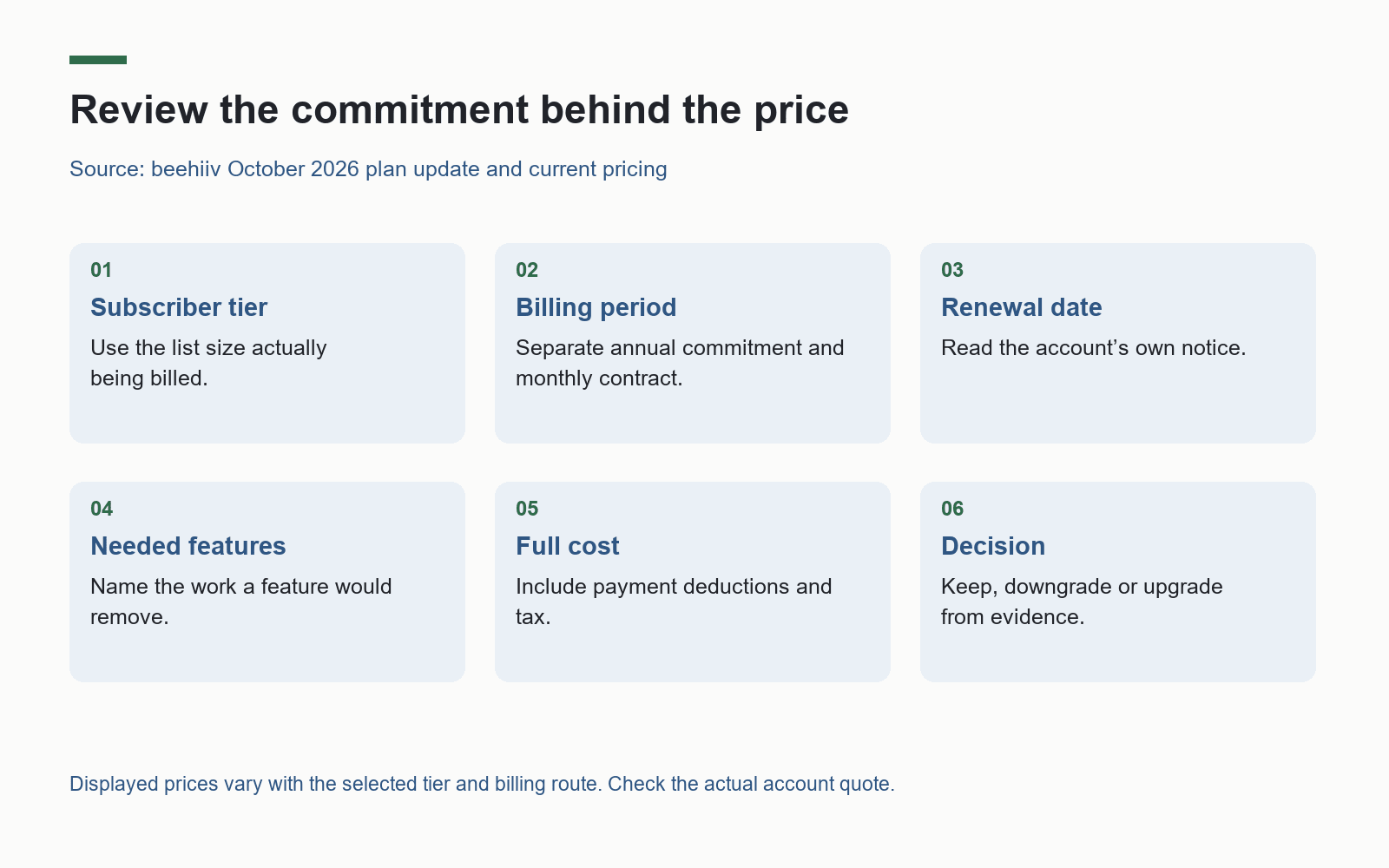
Start with the renewal notice and the subscriber tier being billed. Compare it with the publication you operate now: active offers, required automations, sending volume and the people who need access.
Do not delete consenting readers merely to force a lower tier without assessing the audience effect. At the same time, avoid paying indefinitely for records you are not entitled to contact or that should remain unsubscribed. Keep permissions and suppression status intact.
List genuine replacement costs. If a new plan would let you retire a separate paid service, verify that the required feature and export workflow actually work before cancelling anything.
Which new earning features justify an upgrade?
Only a feature with a clear use and a workable delivery or sales plan can justify its additional cost. Tip Jar can collect voluntary support, while podcast ads create a different advertising opportunity. Neither establishes revenue merely by being switched on.
For a reader-funded publication, settle the paid-versus-free offer first. A paid subscription needs a benefit people want and a schedule you can sustain.
What should you do now?
Save the current quote, billing term and relevant feature limits. Make a keep, downgrade or upgrade decision using the cost you will actually pay, including applicable deductions and tax. If migrating, include content, subscriber status, payment continuity and URL changes in the work estimate.
Our recommendation: fund a plan from an existing operational need, not an assumed monetization result. Revisit the decision when observed revenue, audience size or required functionality changes.
Sources
- October announcement, checked November 28, 2026.
- beehiiv lists Lite at USD 49 per month with yearly billing, checked November 28, 2026.
Information only, not financial, tax or legal advice. Fees and prices change, so check the platform before you act. Disclaimer (opens in a new tab)
Was this article helpful?



Comments