



On this page
Instagram long videos are moving beyond a vague ambition: the platform announced a test of horizontal videos up to 90 minutes on October 26, 2026. For creators, the sensible move is to prepare a small experiment alongside existing channels. As of November 27, a longer upload format does not establish a general YouTube-style earnings program, and moving an entire business would be premature.
What happened with Instagram long videos?
Instagram is testing a longer horizontal format, rather than giving every account a new standard upload limit. Its October 26 announcement video introduced the test. TheWrap’s reporting on the announcement describes a test that began with selected creators in Brazil and was extending to selected US creators. Its reported maximum is a ceiling, not a recommended running time.
An interview, documentary or detailed lesson could benefit from that extra space. A short idea stretched into a feature-length upload probably would not. Treat access to the test, the ability to upload and the ability to earn as separate questions.
What is Instagram’s vision for longer viewing?
Meta’s stated direction is deeper storytelling and shared viewing. Its June 22 Instagram for TV announcement discussed horizontal video, longer creator stories, episodic series and live experiences for the living room. Those are product ambitions, with some experiences still described as tests or exploration.
Our interpretation is that Instagram wants a relationship with viewers that lasts beyond a quick scroll. Short clips could introduce a creator, while a complete episode gives an interested viewer a reason to stay. That interpretation fits the announced direction; it does not prove how people will actually watch or how the business model will develop.
Why it matters
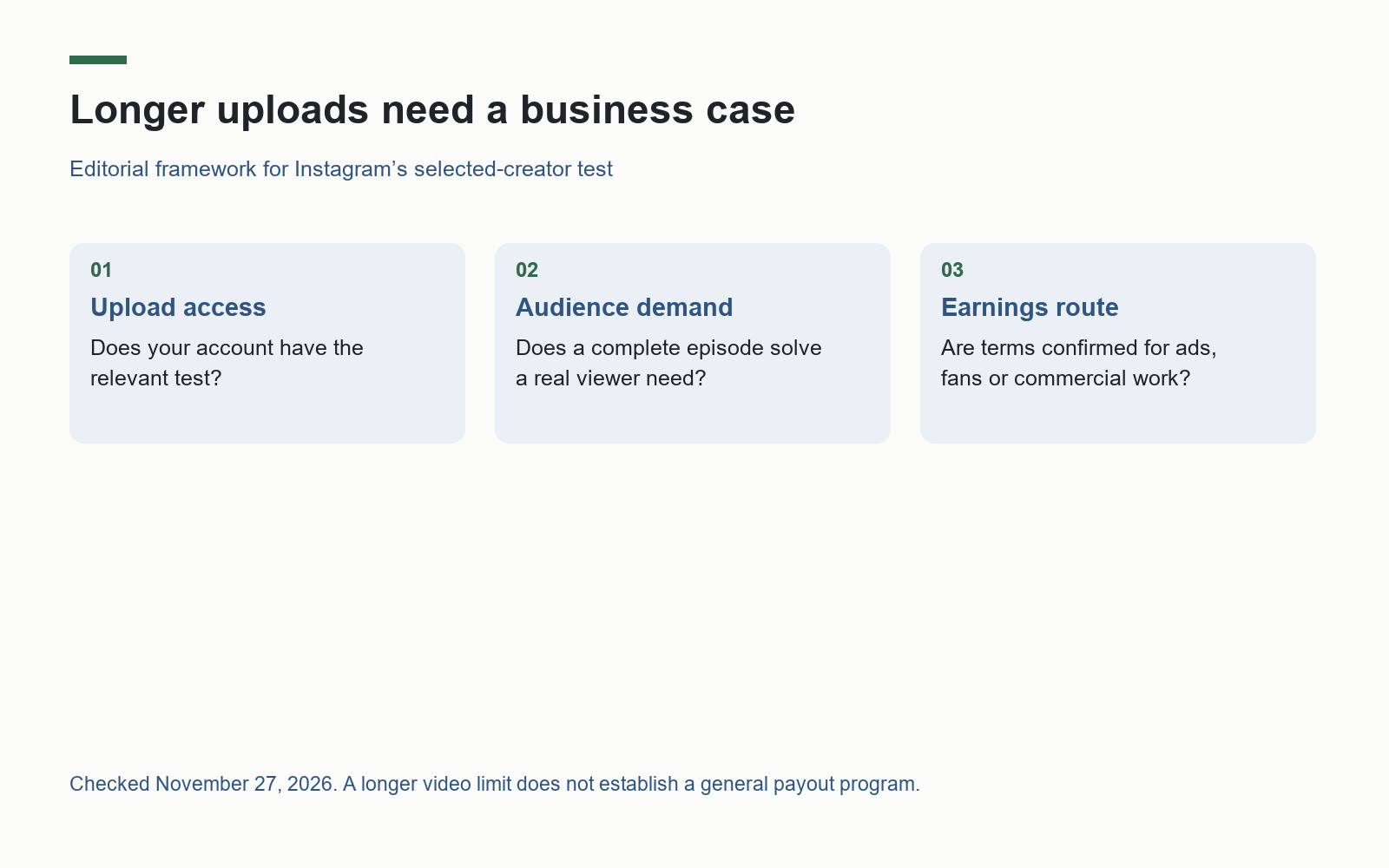
Longer videos could let creators reuse their production skills across more places. An educator could publish a complete explanation, an interviewer could retain context, and a maker could show a process that needs more than a short clip. That creates potential value even before a new native payout product exists.
But more viewing time also means more work. Research, scripting, sound, editing and rights clearance can all expand. A creator who already makes long-form work has a cheaper experiment than someone building a new production operation around an unconfirmed revenue stream.
The important earnings fact is narrow: Meta has not confirmed a long-term payout model for Features. Do not attach a made-up RPM to the format.
Could creators eventually earn as they do on YouTube?
They could gain additional earning opportunities, but the mechanism is not settled. A native ad share, fan payments, sponsorships and affiliate sales are different models. They would produce different eligibility rules, costs and reporting.
One possible future is that a creator distributes the same original series across YouTube and Instagram, then sells sponsorships around the combined audience. Another is that Instagram develops a wider direct payout product. Either would require clear terms, reliable audience demand and usable reporting. Neither is a promise about what Instagram will launch.
For a current decision, use our Instagram versus YouTube comparison. It separates the experimental opportunity from the more established monetization structure.
What should creators do now?
Start with an existing, rights-cleared piece of long-form work if your account receives access. Choose a story that still makes sense without platform-specific references. Keep a clean master file and separate versions of any music or sponsor integrations whose licences limit distribution.
Define the experiment before posting: whether people start the full video, how much they watch, whether they return and whether they take a useful next action. Record the extra editing and support time. A larger view count alone cannot show whether the experiment earns its keep.
Keep your established channel running. Compare Shorts and long-form economics before changing the production mix, and use creator income without ads to identify an offer you can actually deliver.
Our recommendation: test a complementary distribution channel when access arrives. Commit a larger budget only after the audience evidence and the earning terms justify it.
Sources
- October 26 announcement video, checked November 27, 2026.
- TheWrap’s reporting on the announcement, checked November 27, 2026.
- June 22 Instagram for TV announcement, checked November 27, 2026.
- Meta has not confirmed a long-term payout model for Features, checked November 27, 2026.
Information only, not financial, tax or legal advice. Fees and prices change, so check the platform before you act. Disclaimer (opens in a new tab)
Was this article helpful?


Comments