




On this page
Creator income without ads works best when you sell a useful result to a suitable buyer, rather than trying every monetization feature at once. Checked November 27, 2026, our first pick for a creator with a demonstrable skill and a small audience is a narrowly defined production service. Add audience-based income only when you have the trust, access and capacity it requires.
1. Sell a bounded production service first
A production service is our starting pick because a buyer can assess the work without requiring a large personal audience. An editor can show a before-and-after sequence, a photographer can show a suitable portfolio, and a scriptwriter can show a clear sample.
Sell a defined output with required inputs, revision limits and an acceptance check. Count acquisition, briefing and administration as work. This route is unsuitable when you cannot reliably deliver the promised quality or meet the agreed schedule.
Use actual evidence and a small paid project rather than inventing clients or offering unlimited revisions. The offer can use your creator skills while remaining distinct from access to your own followers.
2. Negotiate a relevant brand partnership
A brand partnership suits a creator whose actual audience matches a commercial problem. You can sell a clearly defined integration, a commissioned production or licensed use of content, but those are separate components and should be described separately.
Read brand deals versus platform ads before quoting. Production, distribution, paid-ad rights and exclusivity have different costs. A single fee without scope can become an obligation much larger than the original video.
Skip a partnership when you cannot honestly support the claims or the product does not fit your audience. Clear disclosure protects the reader’s ability to judge the recommendation; the FTC’s influencer guidance explains US-facing material-connection disclosure. Other jurisdictions can require different steps.
3. Recommend a product through a suitable affiliate program
Affiliate income fits a useful explanation where the viewer has a genuine reason to consider the product. It pays under the relevant program’s qualifying-purchase rules, rather than because a video has accumulated a certain number of views.
Explain the limitation as well as the benefit. Check the actual rate, product category, attribution and refund conditions. Amazon’s program policies show why a checkout amount and a qualifying commission base can differ.
This route is unsuitable when the only editorial reason to mention the product is the commission. The new Instagram Amazon connection is one limited-access option, not proof that every creator worldwide can use it.
4. Run a focused workshop with a clear outcome
A workshop fits a task that people can make meaningful progress on in a defined session. An original practical exercise and a clear starting requirement are stronger than a broad promise to transform someone’s career.
Describe the intended learner, materials, format, accessibility needs, recording policy and refund or cancellation terms. Test your setup before accepting participants. Budget preparation, delivery, questions and follow-up, not just the time on the call.
This is unsuitable when the subject requires credentials you do not hold or individual advice you cannot responsibly provide. General educational content should not drift into unsupported financial, legal or medical recommendations.
5. Offer a sustainable membership
A membership fits a recurring need and a creator who can deliver a recurring benefit. It should answer why a member would remain next cycle, not just why a loyal viewer might want to encourage you today.
Our membership pricing guide covers a cost floor, delivery capacity and the difference between customer price and creator proceeds. Read the platform’s benefit rules; YouTube’s membership guidance shows the kinds of perks that may be offered.
Skip this route if the useful offer is a one-time result or you cannot sustain the promised work. Recurring billing does not make production, moderation and support disappear.
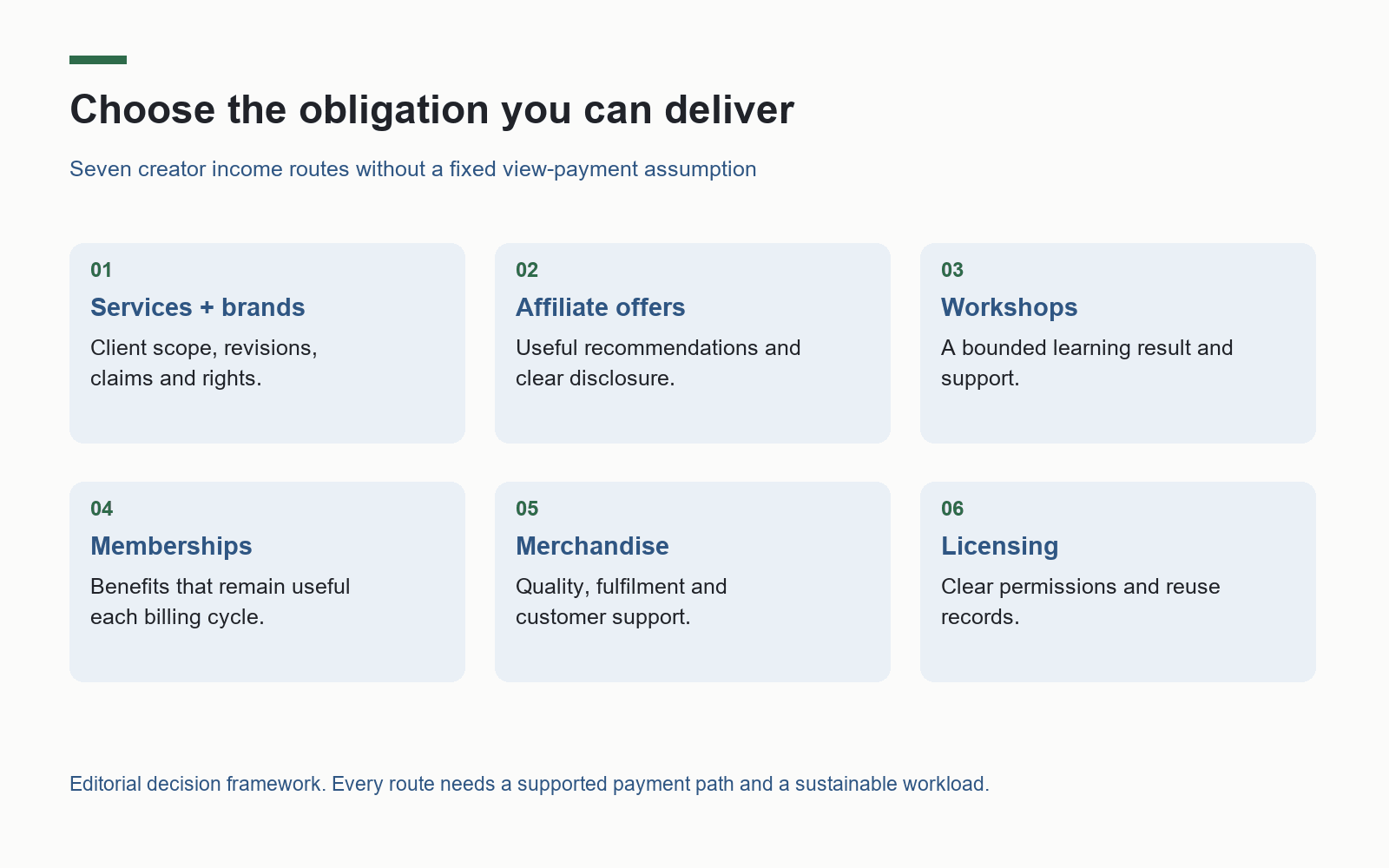
6. Test original creator merchandise
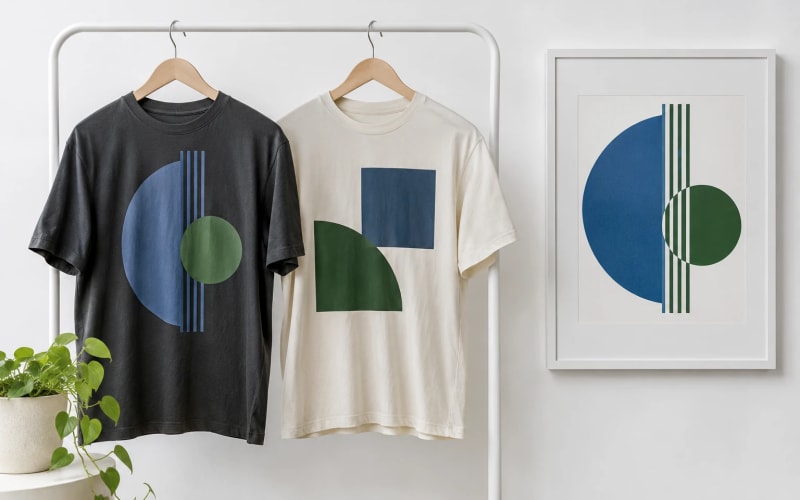
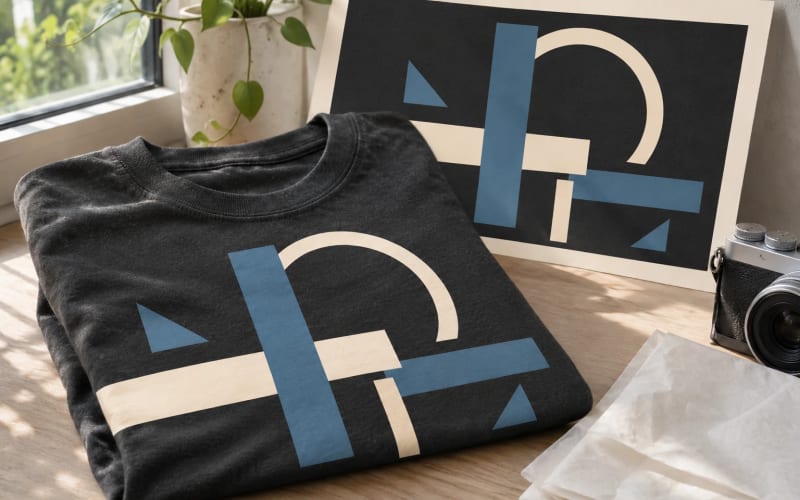
Merchandise fits an audience with a specific connection to your original work. Start from the reason someone would want the physical object, then check the design, sample, payment path and delivery economics.
Use a small creator merch test before a collection. Include production, shipping, selling deductions, support and a reserve for problems. A seasonal design signal can inspire the test, but it cannot establish paid demand.
This route is unsuitable when the visual idea depends on someone else’s protected work or when a weak fulfilment operation would disappoint buyers. A generated concept image should never be presented as proof of an actual sample.
7. License original work with defined permissions
Licensing fits work that another business genuinely wants to use, such as original footage, photographs or a recorded explanation. The licence must identify what is permitted and what remains excluded.
Define the material, destination, duration, editing permissions, credit, exclusivity and any use of a person’s likeness. Keep underlying music, assets and participant permissions aligned with the use being licensed. Ownership of a project file does not automatically clear every included element.
Our content-protection workflow explains why a record of authorized reuse matters. Licensing law and contract interpretation vary; use qualified advice where the stakes justify it. This is general information, not a ready-made licence.
Which creator income without ads should you choose?
Choose one route that matches both your evidence and your capacity. The quickest route to quote is not necessarily the easiest to fulfil.
| Your strongest current asset | First route to examine | Obligation to budget |
|---|---|---|
| A demonstrable production skill | Bounded service | Client delivery and revisions |
| A relevant specialist audience | Brand partnership | Scope, claims, reporting and rights |
| Credible product knowledge | Affiliate recommendation | Useful content and disclosure |
| A teachable practical process | Workshop | Preparation and learner support |
| A recurring audience need | Membership | Ongoing benefits and moderation |
| A distinctive audience connection | Merchandise | Product quality and customer support |
| Original reusable creative work | Licensing | Rights clearance and permitted-use records |
Before committing, complete the general monetization eligibility checks. A commercial route needs a supported payment path even when it does not require native platform monetization.
Measure retained revenue and total time. Keep paid work, affiliate commissions and fan support separate in your records so you can see which obligation actually produces the return. One-off success is useful evidence, but it does not establish dependable recurring income.
Our recommendation: start with one bounded service if your skill is the clearest asset. Choose an audience-led route when you have evidence of fit, and expand only after you can deliver the first offer reliably.
Sources
- FTC’s influencer guidance, checked November 27, 2026.
- program policies, checked November 27, 2026.
- membership guidance, checked November 27, 2026.
Information only, not financial, tax or legal advice. Fees and prices change, so check the platform before you act. Disclaimer (opens in a new tab)
Was this article helpful?

Comments