




On this page
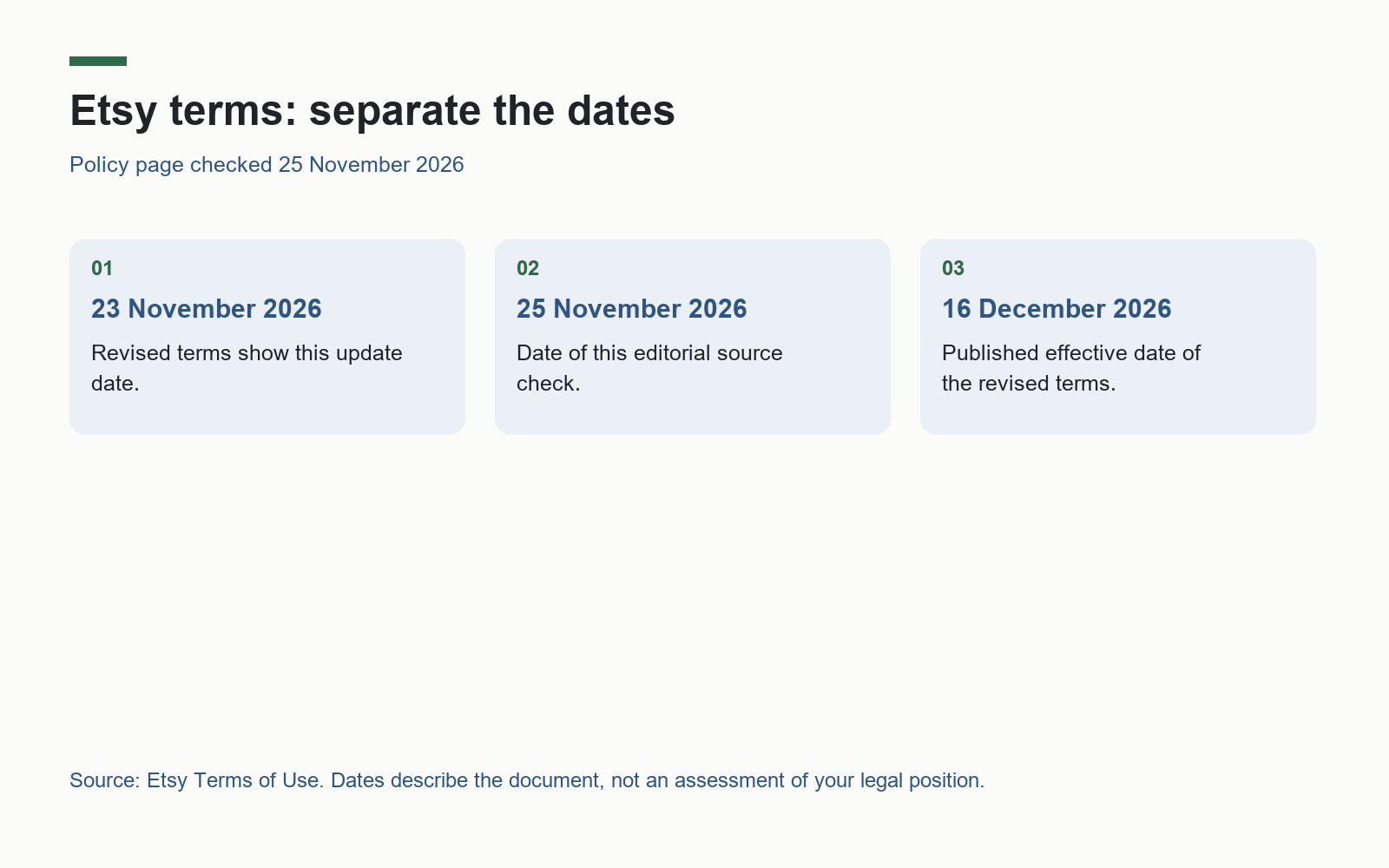
Etsy AI terms were revised on November 23, 2026, with the published version taking effect December 16. Sellers should read the new content licence, preserve their original files and assess how much of their business depends on Etsy. The change deserves a practical review; it does not by itself establish that Etsy owns your artwork.
What happened
Etsy’s published Terms of Use distinguish ownership of seller content from the licence granted when that content is posted. The revised AI language describes uses connected to operating and improving Etsy’s services, including discovery, seller tools, support, advertising and security. It also states that Etsy will not train models designed to replace sellers’ creativity or create copycat versions of their items.
The page identifies December 16 as the effective date and links the version applying through December 15. We checked that distinction on November 25, 2026. A future effective date matters: a discussion about the revised document should not silently treat it as the terms already governing every transaction today.
Why it matters
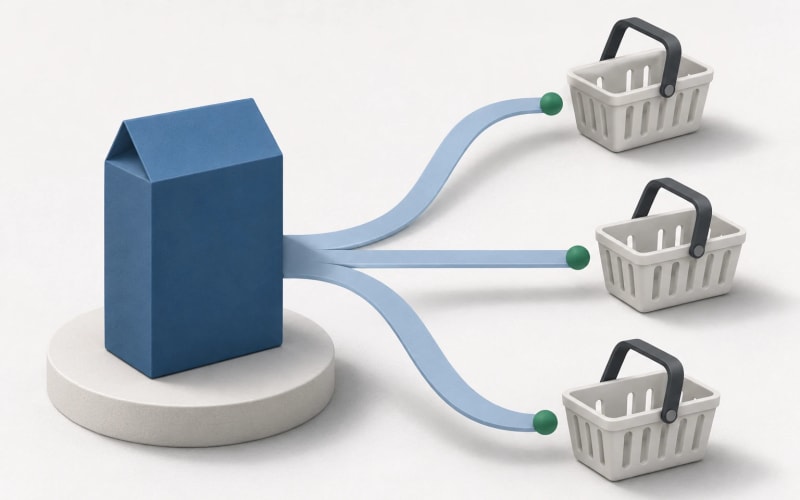
A marketplace is both a source of customers and a dependency. If its terms become uncomfortable, moving a listing is only part of the decision. You also need a workable way to attract buyers, deliver purchases and handle questions elsewhere.
The financial question is therefore broader than a platform fee. What would it cost in time and marketing to replace the customers Etsy currently supplies? What original assets would be difficult to recreate? Which customer relationships and records can you lawfully retain independently?
We recommend making those questions concrete before making an irreversible channel decision. A small seller with no direct audience faces a different trade-off from an illustrator with repeat clients and an established mailing list. In both cases, a current inventory of designs and licences is useful even if the seller stays.
What should you review in the Etsy AI terms?
Review the content licence and the business consequences separately. The first concerns the permission attached to posted material; the second concerns how you would continue selling if you chose a different channel.
| Review area | Record to keep | Practical decision |
|---|---|---|
| Original creative assets | Editable masters and creation history | Keep independent backups |
| Bought or licensed assets | Licence version and purchase record | Check permissions before uploading |
| Marketplace dependence | Orders and contribution by channel | Estimate the cost of diversification |
| Future listings | Content you intend to publish | Decide whether the terms fit your business |
This is general information about a published platform policy, not a legal opinion about a particular licence or dispute. If exclusivity or an important client agreement is involved, ask a qualified professional in the relevant jurisdiction to review the actual documents.
What to do now
- Save the relevant documents. Keep a dated copy of the terms you are evaluating alongside the version currently in force. Store your own notes separately so you can tell policy text from your interpretation.
- Back up your originals. Preserve editable artwork, exported customer files and source-asset licences in an independent location. A marketplace listing should not be the only surviving copy of your work.
- List your dependencies. Record where discovery, payments, delivery and customer support happen. Identify a realistic alternative for each function rather than assuming a second storefront replaces all of them.
- Choose a measured next step. That might be continuing with documented acceptance, obtaining professional advice, or testing a direct channel for future products. Do not promise existing customers a migration you cannot support.
Should you move your shop immediately?
Make that decision from your rights, obligations and customer-acquisition costs. Our default recommendation is to preserve your files and evaluate an additional channel before closing a functioning source of orders. A seller whose contractual commitments conflict with a platform licence needs a different assessment and appropriate advice.
For the channel decision, compare Etsy with a direct Payhip store. For listing images, read the separate Etsy AI photo rules and POD exceptions. Before uploading a new collection, use the AI-assisted POD rights checklist.
Tip: Keep a design record that connects the original file, every licensed input and the customer-facing export. It is useful when a marketplace policy changes, a buyer asks for evidence or you move to another channel.
Sources
- Etsy: Terms of Use, updated November 23; effective December 16, 2026, checked 25 November 2026.
- Etsy: Important updates to AI use, October 22, 2026, checked 25 November 2026.
Information only, not financial, tax or legal advice. Fees and prices change, so check the platform before you act. Disclaimer (opens in a new tab)
Was this article helpful?


Comments