



On this page
POD design trends are useful as test ideas, not proof that a design will sell. Checked November 27, 2026, our first pick from Etsy’s current seasonal signals is a small original maximalist design test on a product you already understand. Use marketplace evidence to narrow the idea, then verify production quality and contribution before adding more designs.
What does Etsy’s current report actually show?
Etsy’s October 14 Fall and Winter 2026 report combines marketplace search and sales signals with forecasting. Its stated data cutoff is September 14, with comparisons generally covering the preceding three months against the prior year. Some demographic measures cover a subset of US activity.
The report identifies themes including Merrymaxxing, Mark of the Maker, Table Dressing, Craftmas and Operatic Drama. These are broad marketplace directions. They are not measurements of demand for your particular print-on-demand product, and we are not reproducing their growth percentages as POD sales forecasts.
The ranked ideas below are our proposed translations into original print design. None has been sample-tested or sold by us. Late-season interest also does not establish that a new order can arrive for a holiday.
1. Test original maximalist graphics first
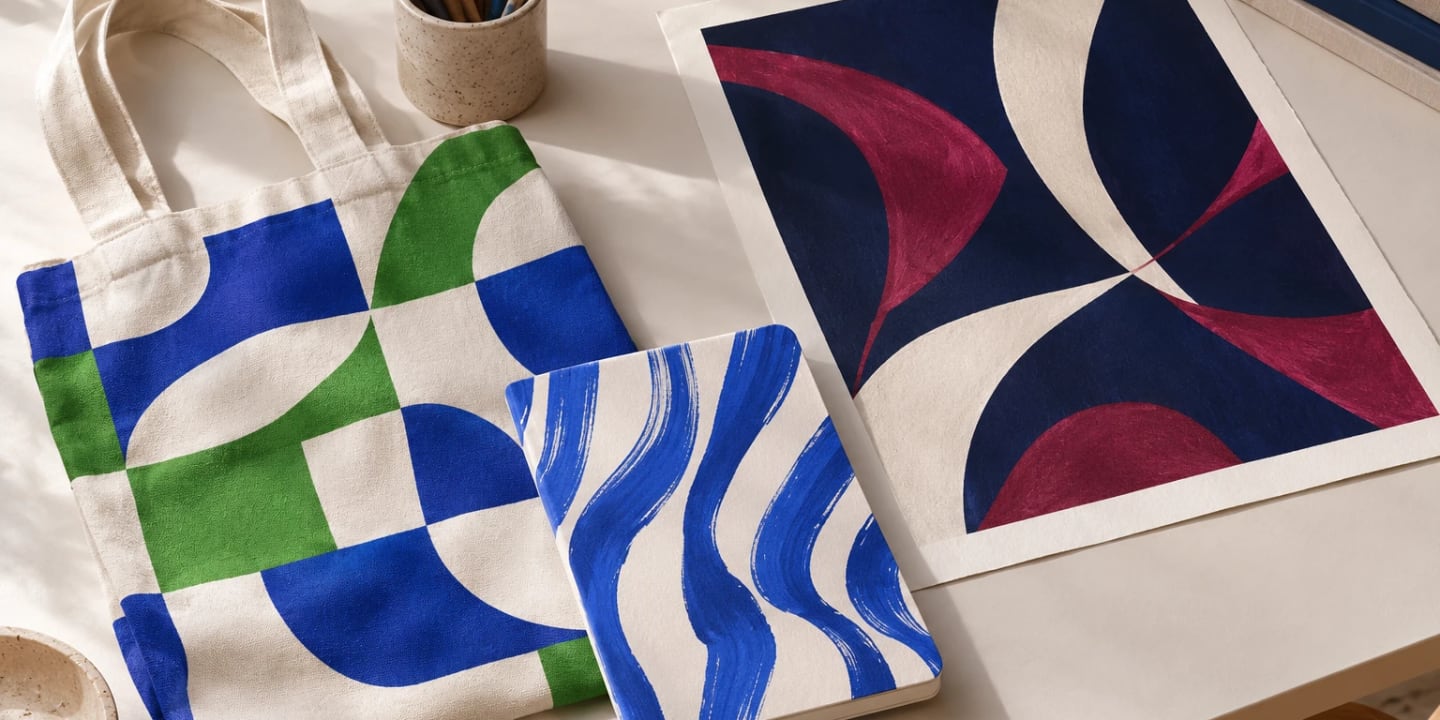
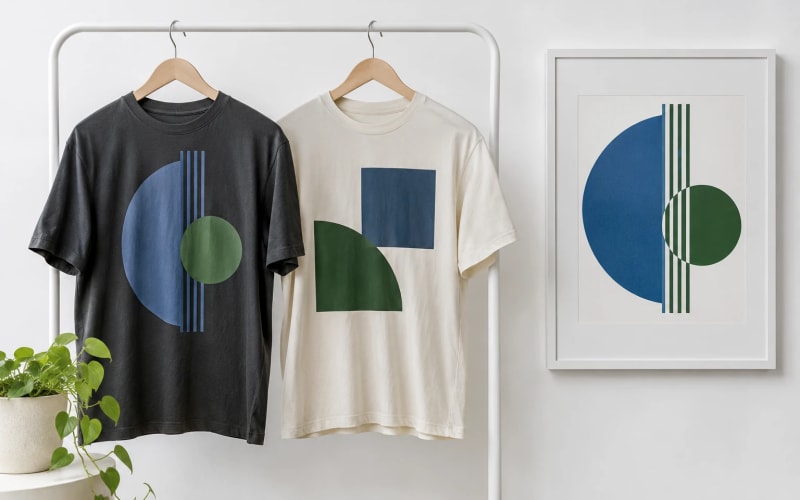
Our first pick is a compact collection of original bold geometric graphics because it can create a visibly different product without complicated personalization. Etsy’s Merrymaxxing theme provides the seasonal context; the specific artwork and product proposal here are ours.
Build the design from your own shapes and a controlled palette. Give it a clear visual idea rather than adding every possible colour and motif. Test the print scale at the actual product dimensions and inspect whether the colours remain distinct on the chosen material.
This suits creators who already have a playful visual language. Skip it if the only reason for the design is that another seller’s artwork appears popular. A trend direction is inspiration to investigate, not permission to reproduce somebody else’s composition.
2. Use visible original marks without inventing a process
An original brushwork design can connect with the report’s Mark of the Maker theme while remaining an honestly described print. Paint, scan and refine your own marks, and keep the source work. A notebook or art print could provide a manageable initial format when your supplier supports it.
Describe a printed product as printed. Do not label a POD item hand-painted, hand-embroidered or handmade in a way that misrepresents how the finished object was produced. Show the real process and the physical sample when available.
This suits an artist whose original marks are central to the offer. Skip it when the effect depends on texture that the print method cannot reproduce convincingly.
3. Explore coordinated table graphics carefully
Table Dressing suggests a setting-based design test: a small coordinated print collection for a gathering, subject to suitable production options. Think about the buyer’s intended setting and how the pieces work together, rather than treating every table accessory as an interchangeable POD item.
Start with one supported format and check material suitability, care instructions and print placement. A decorative print is not evidence of food-contact suitability, wash performance or heat resistance. Use supplier documentation and actual sample checks for those questions.
This suits a shop already serving hosts or event buyers. Skip it when the product needs unverified functional claims or an unreliable delivery window.
4. Translate drama through your own visual language
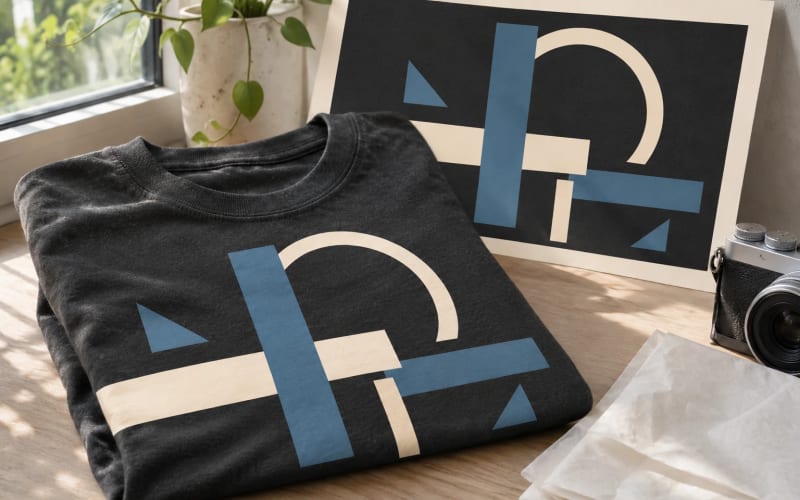
Operatic Drama can inspire an original palette, scale or composition without copying period artwork or another designer’s ornament. A dark abstract art print with a clear focal point is a possible test, not a product identified as a bestseller by the report.
Check that dark areas retain detail and that the surface suits the intended viewing conditions. Small on-screen highlights can disappear or look different in print. Use a real sample before making close-up quality claims.
This suits an artist with a coherent dramatic style. Skip it if the appeal relies on a protected costume, recognizable character or another brand’s visual identity.
5. Support a creative activity instead of pretending to sell a kit
Craftmas suggests an activity-led audience, but a printed product is not automatically a craft kit. A creator could investigate an original printed project notebook or reference poster that genuinely supports an activity they teach.
Define exactly what is included and what the buyer supplies separately. Do not use a photo full of tools and materials if the order contains only a notebook. The design must help the activity rather than merely borrowing a seasonal label.
This suits a creator who already teaches a process. Skip it if you cannot explain the practical use or the customer would reasonably expect supplies that are absent.
How should you choose among these POD design trends?
Choose the concept closest to your existing skill, customer and supported product. The best initial trend is the one you can test honestly without creating a complex operation.
| Proposed direction | First evidence to seek | Reason to stop |
|---|---|---|
| Original maximalism | Relevant category searches and product-specific interest | Artwork resembles a competitor |
| Visible original marks | Demand for your own process and style | Description overstates hand production |
| Table graphics | A specific hosting use case | Unverified material or care claims |
| Dramatic composition | Buyer interest in your original artwork | Dark print loses essential detail |
| Activity companion | A real task the printed item supports | Buyer expects a complete craft kit |
Etsy recommends checking relevant searches in Marketplace Insights. Use that evidence within the actual category rather than assuming a broad theme transfers to all products. Keep your observations separate from your interpretation.
Then price the exact product and destination using a current supplier quote. Include shipping, selling fees, support and a reserve for problems. The POD profit calculator can structure the arithmetic; your actual inputs determine the result.
For the next step, follow our creator merch test. Pair the launch with a suitable creator income method and preserve the underlying artwork using the original-content evidence workflow.
Our recommendation: test one original maximalist concept if it fits your audience. Keep a trend only when the specific product, sample and margin support it.
Sources
- October 14 Fall and Winter 2026 report, checked November 27, 2026.
Information only, not financial, tax or legal advice. Fees and prices change, so check the platform before you act. Disclaimer (opens in a new tab)
Was this article helpful?
Comments